Expedition to Uzbekistan reveals a Gulag camp and the only surviving prisoners' barrack
April 17, 2026 | Expeditions | Expedition ‘Dead Canal’, Uzbekistan
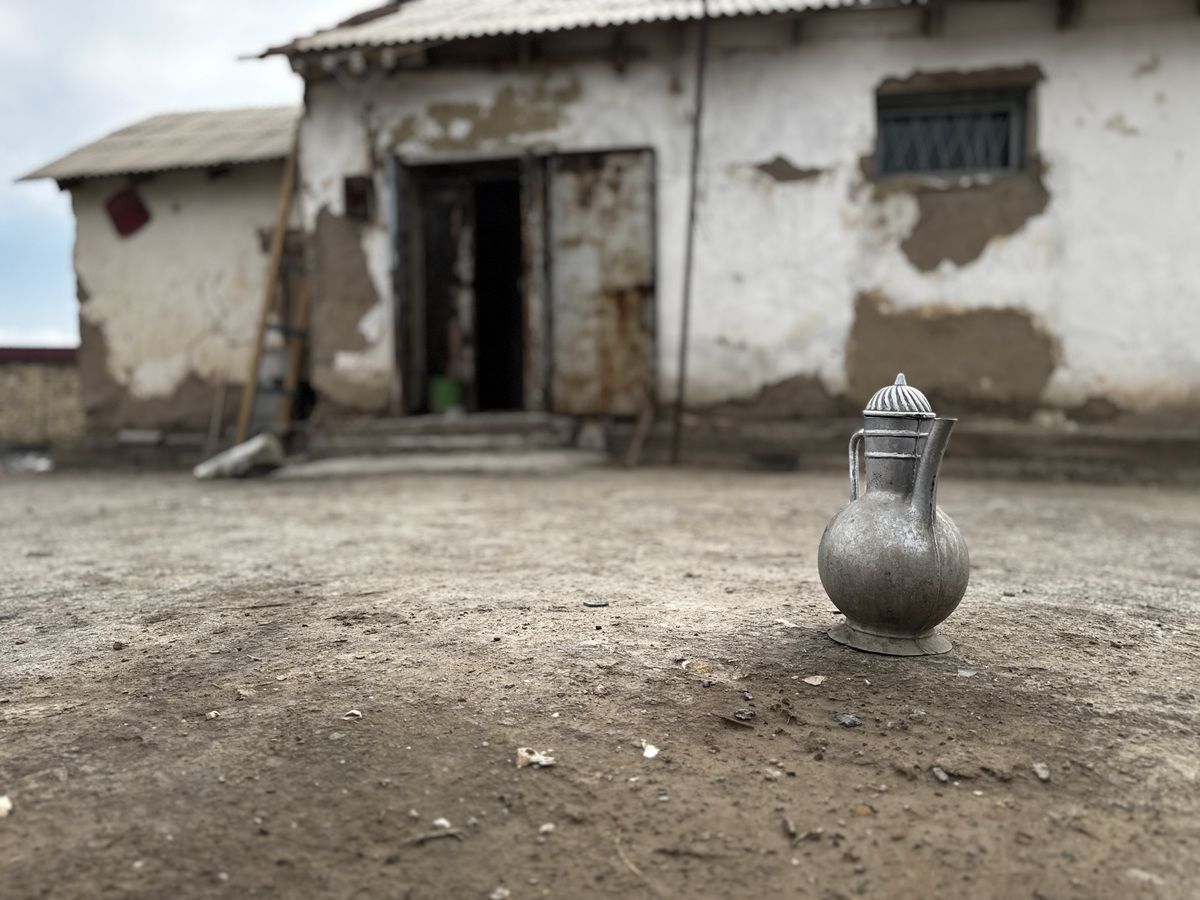
As part of our April expedition to Uzbekistan, we set out on the trail of a megalomaniac Soviet government project from the 1950s known as the Great Turkmen Canal. It was meant to become the second-longest canal in the world, designed to bring water from the Amu Darya river across the Karakum desert all the way to the Caspian Sea. The ambitious construction, however, ended just as quickly as it had begun. The main burden of carrying it out fell on Gulag prisoners, for whom a special camp complex was set up. During the expedition, we managed to identify the site of one of the camps, and we documented in detail the only standing barrack as well as the remains of other structures.
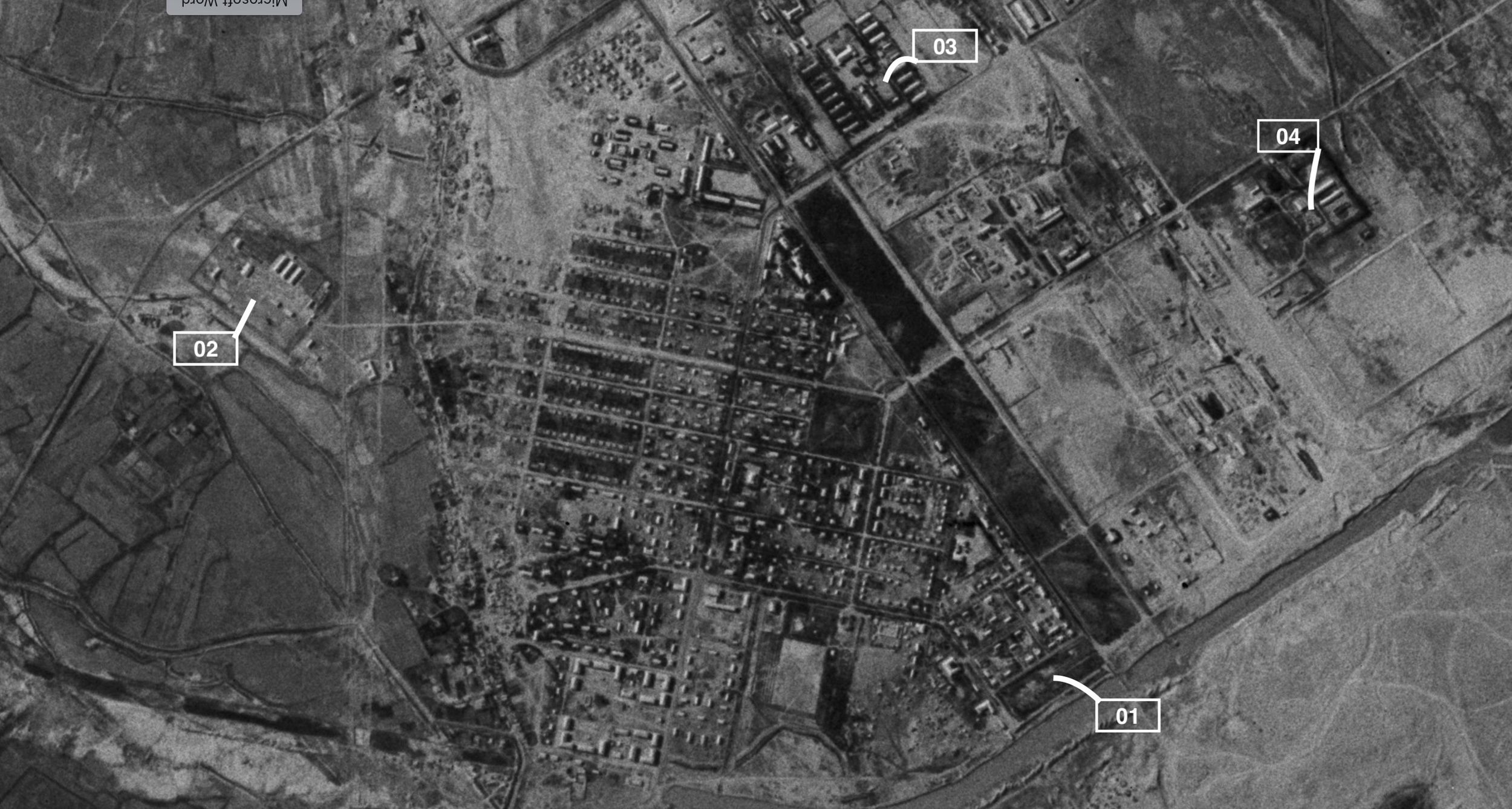
The path to identifying the exact site of the camp was not straightforward, and we could not have managed without declassified CIA spy satellite images from 1962, which we obtained before the expedition. According to these, it turned out that the first location we had originally believed to be the camp (since that is how local residents referred to it) was not yet built up in 1962, and therefore could not have been a camp from the period when the Great Turkmen Canal was under construction. We therefore turned our attention to other sites which, according to the images from the early 1960s, showed the layout of camps as we know it from our previous expeditions to Siberia and Kazakhstan. We identified three such locations, two of which, as closer inspection revealed, have been so altered by more than 70 years of urban development that nothing original can be identified there anymore.
The third location, however, remained relatively untouched, since from the late 1960s onward it was occupied by an electrical engineering vocational school with large, unused plots of land. And it was precisely on these plots that the camp had been located.


The fact that this really was a Gulag camp was confirmed to us by a former caretaker of the vocational school, Mr Kalmurat, who, together with his sons, is the only person still living on the grounds of the former school (the complex has been abandoned since 2009). He lives in a small house that looks, at first glance, like it dates from the 1950s, and it was indeed confirmed to us that it is the only fully preserved building from the former camp — originally the guardhouse at the camp gate, from which guards checked people entering and, using poles from the loading ramp, also checked the loads on vehicles (during the vocational school era, there was a snack bar there). Mr Kalmurat himself used to attend the school back in the day, but above all, his father had worked at the camp as a stoker — hired labor that had little direct contact with the prisoners. However, his father had described to him in great detail which barracks stood where in the camp and under what conditions the prisoners lived there, and Mr Kalmurat passed all of this on to us.
Once again, we had the feeling as if someone had opened an imaginary gate for us at just the right moment, and that after a long stretch of wandering and dead ends, an improbable chain of events was suddenly guiding us toward the successful fulfilment of our goals. We could not have counted in advance on the fact that the sole remaining resident of the former camp site would turn out to be someone whose father had not only worked at that very camp, but had, above all, passed the entire memory of the place on to his son. And he, in turn, shared it with us. Neither our local historian colleagues, nor people from the town hall, nor the many people we met in Tahiatash managed to give us any details about the camps from the Stalinist era — everything seemed to have long since been buried under the dust of history. But Mr Kalmurat was in his place on the day of our visit, as if he had been waiting for us.


And so now we know that the three barracks visible on the satellite image really were prisoner barracks; we know where the solitary confinement block was (and that it had 12 individual cells, each with only a small, barred window), where the food storage and canteen were, where the changing room and disinfection facility stood, how large the roll-call square (buzerplac) was, where the guard towers, workshops, gate and guardhouse were located. We verified all of this in detail using old and current satellite imagery, the remains of foundations and walls, Mr Kalmurat's account, and our experience from previous expeditions. For instance, it turns out that the placement of the solitary confinement block relative to the other barracks followed an iron rule throughout the entire USSR, whereas, by contrast, the size of the barracks and of the camp itself, as well as the layout of the other structures, did not follow any single uniform format. This camp was relatively large (270 x 190 metres), and an estimated 500–700 prisoners lived there. That, incidentally, is only around 10 percent of the total number of prisoners who, according to archival materials, worked on the construction of the Great Turkmen Canal — so there is still more to discover and refine, and there were undoubtedly more camps in this area. However, we have gathered so much material and documentation that we will be able to reconstruct the appearance of this camp, at least virtually.


From Mr Kalmurat (who is himself Uzbek by nationality), we also learned that among the prisoners here there were many Poles, Ukrainians, Belarusians, but also Russians, who had been sent here from other camps in Siberia — this type of information, incidentally, is not available at all from the archives declassified so far. German prisoners of war also worked here, and after Stalin's death, some of the former prisoners stayed on to live permanently in Tahiatash. At least one German, a certain Mr Schmidt, whom Kalmurat remembered from childhood showing him photos from the war. And incidentally — Mr Kalmurat's father fought in the Red Army and liberated Prague, and as a reward was then given the position of stoker in the boiler room of the labor camp… He did not live in the camp itself but came there to work (as, apparently, did the kitchen staff too) — it was only Kalmurat who moved in here, about 20 years ago. But before that, he attended the vocational school here, and in the 1990s, as he himself admitted, he took part in dismantling most of the barracks that were still standing at the time. Times were hard, and people dismantled unused buildings in search of metal to sell. One little house, fortunately, survived. The former guardhouse — today, Mr Kalmurat's home.
We will process all the discoveries from our expedition in our virtual museum, whose redesign we are currently preparing. On site, we also began talks with the local authorities about preserving this physical memory of the Soviet past and creating a way of commemorating it. We are confident these negotiations will be successful, and we will bring you more detailed information soon!
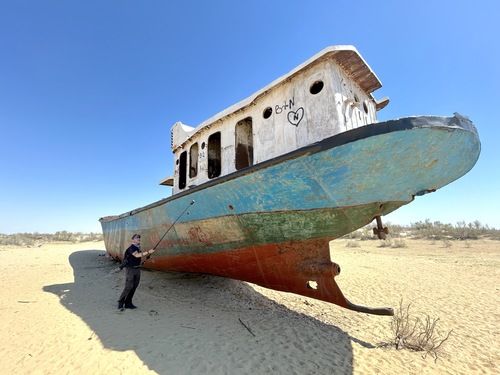
This April, the Gulag.cz expedition brought a unique discovery of the remains of a labor camp in the Uzbek desert. We will be...
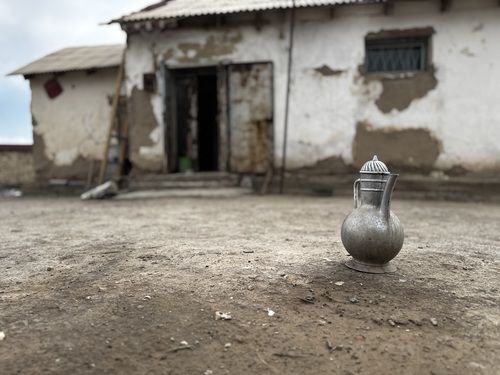
As part of our April expedition to Uzbekistan, we set out on the trail of a megalomaniac Soviet government project from the 1...
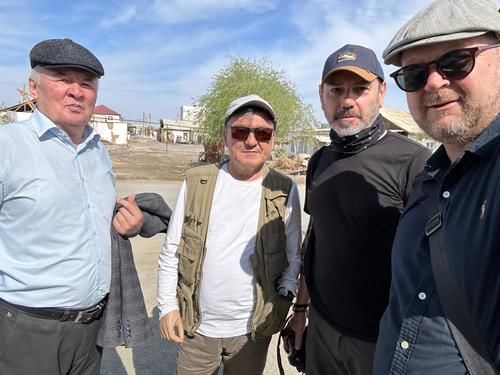
This time, the Gulag.cz research team has set out for Uzbekistan, specifically for its autonomous republic of Karakalpakstan,...
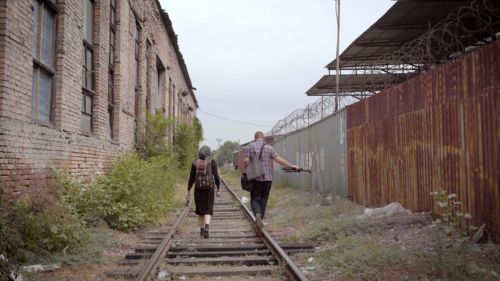
Christmas is approaching, and we have a small gift for you ahead of time! Our film from the expedition to Kyrgyzstan can now ...
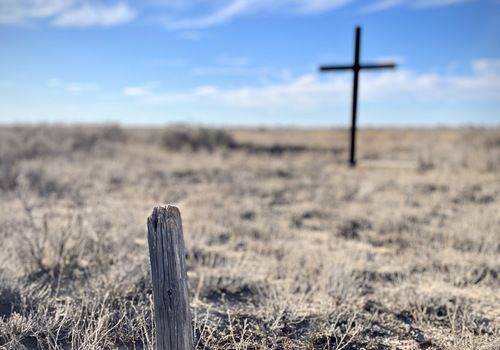
At the turn of September and October 2025, after four years, we returned to Kazakhstan to document the local remains of Gulag...
The Soviet terror left an indelible mark in today’s Kazakhstan. More than one million Kazakhs died of famine and millions of ...
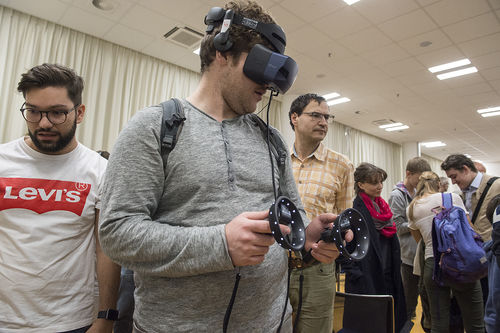
On Wednesday, October 2, 2019 was the premiere of the documentary film "A Journey to the Gulag" about our ...