We have launched a new expedition tracing the Gulag in Uzbekistan
April 14, 2026 | Expeditions | Expedition ‘Dead Canal’, Uzbekistan
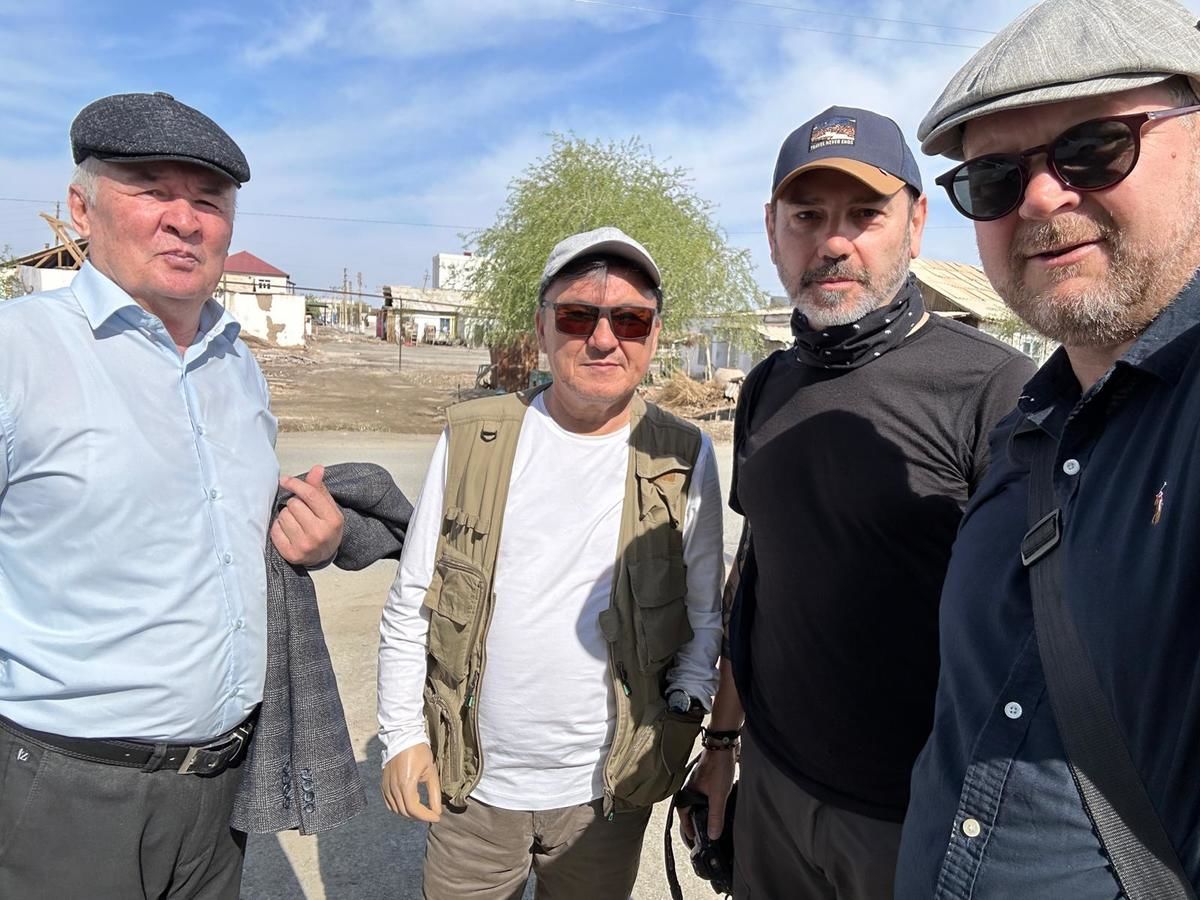
This time, the Gulag.cz research team has set out for Uzbekistan, specifically for its autonomous republic of Karakalpakstan, located in the west of the country (on whose territory the drying Aral Sea also lies). In the Karakalpak capital city of Nukus and in the nearby town of Tahiatash, members of the expedition will be examining the physical remains of a Gulag construction project from the early 1950s known as the Great Turkmen Canal, as well as the remains of prisoner barracks.
Following expeditions to Kazakhstan and Kyrgyzstan, this is now the third destination in Central Asia where Gulag.cz is carrying out similar research. Within Uzbekistan, this is the very first research of its kind — no one has previously devoted themselves to the archaeology of the Gulag and to detailed documentation of the physical remains of camps and Soviet repressions here. We are glad that it is we who bring this first-of-its-kind achievement, though it would not have been possible without our local partners, the Karakalpak Academy of Sciences and the Nukus branch of the Uzbek Museum of Victims of Political Repression.
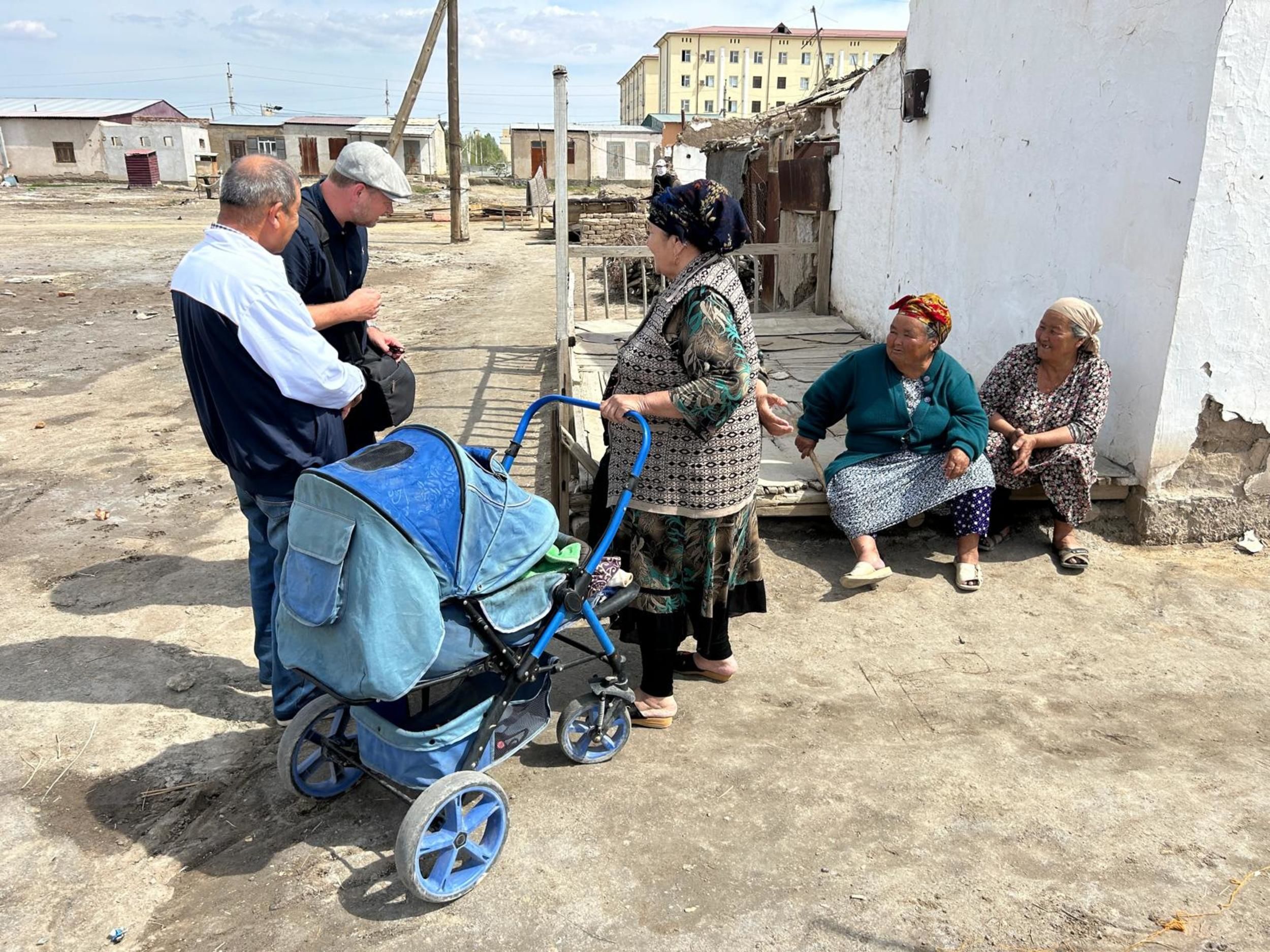
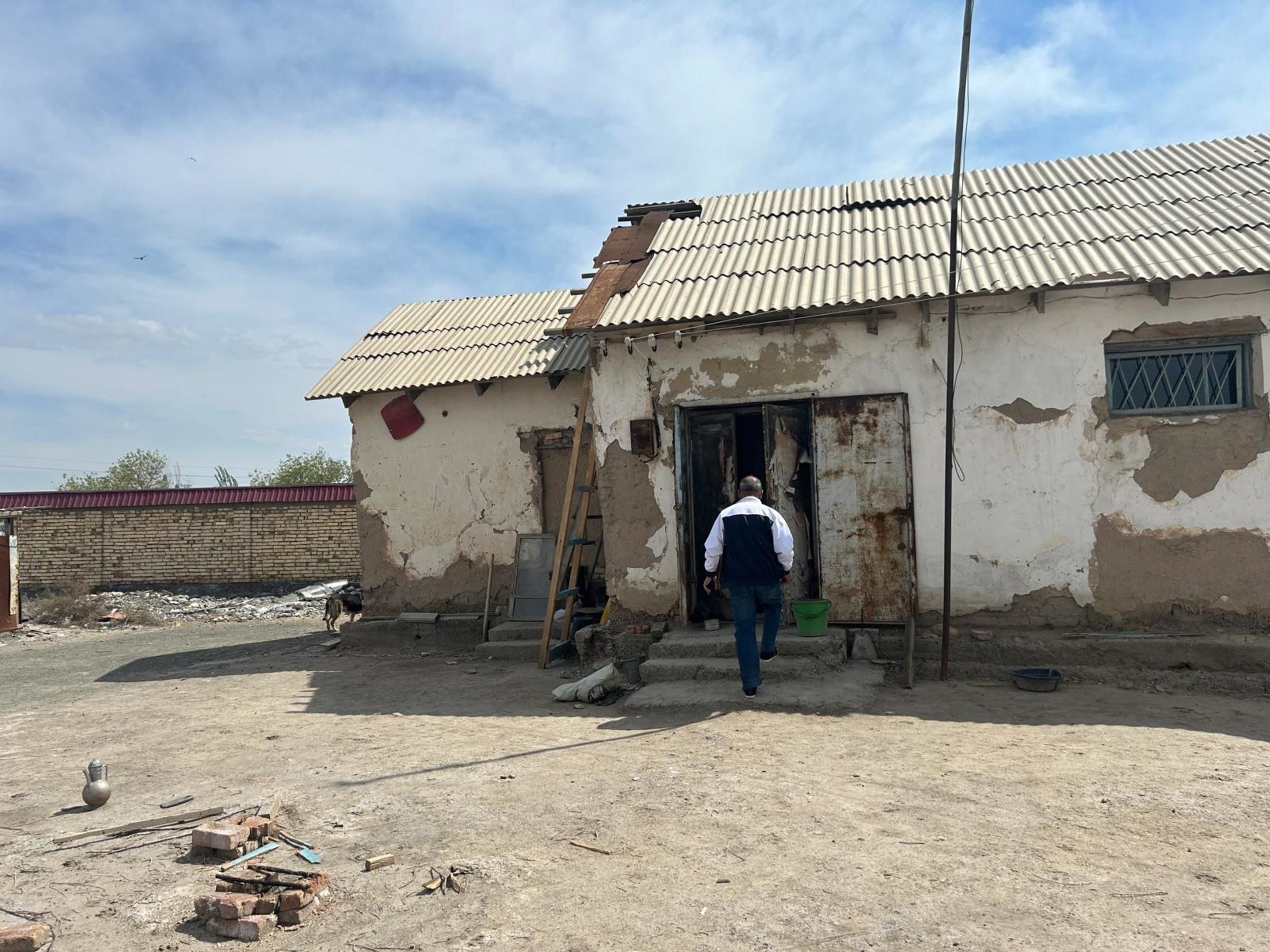
The idea of searching for the remains of the Great Turkmen Canal was put forward by Gulag.cz chairman Štěpán Černoušek in September 2025, when, during one of his trips to Central Asia, he spent two days in Nukus specifically to find out whether any physical trace of this Gulag-era construction project could be found there. On the spot, in the town of Tahiatash, where construction of the canal began in 1951, he learned from local residents that visible remains survive both of the canal itself — never completed and long since abandoned — and of the barracks of one of the prisoner camps, which are now used as residential buildings, though their demolition is planned. He therefore arranged with historians from the institutions mentioned above to carry out a rapid rescue documentation survey, which began on 12 April 2026.
The documentation within the so-called "Dead Canal" Expedition in April 2026 is being carried out by Štěpán Černoušek in cooperation with Roman Smýkal. The Czech team is further joined by local historian Askar Dzhumashev of the Karakalpak Academy of Sciences and Alisher Kudiyarov of the Nukus branch of the Museum of Victims of Political Repression.


History of the Great Turkmen Canal
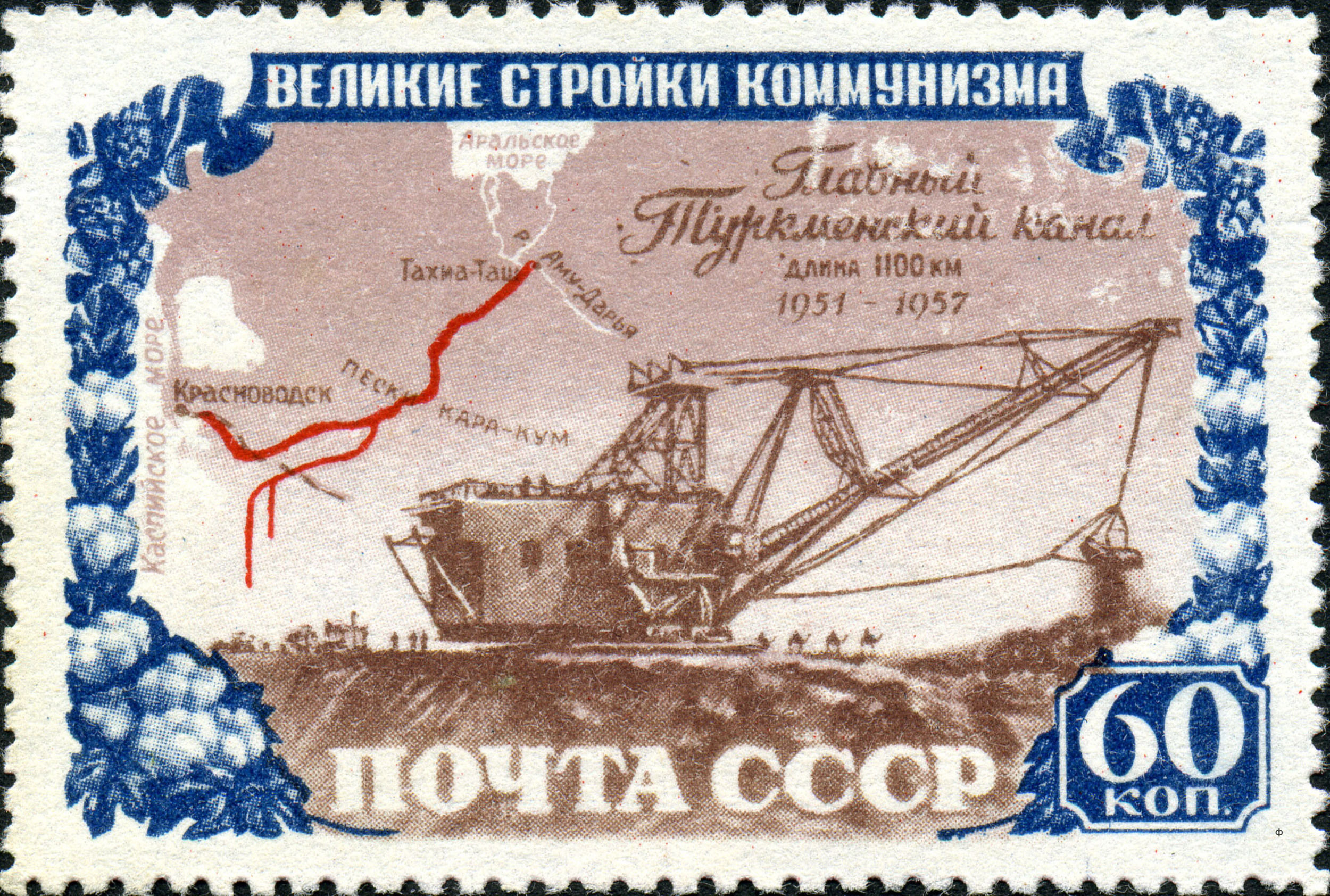
The Great Turkmen Canal was approved by the Soviet government in 1950 as one of the most monstrous projects of the "Great Plan for the Transformation of Nature" and the so-called "Great Construction Projects of Communism". It was meant to measure over 1,100 kilometres, and its purpose was to bring water from the Amu Darya river across the Karakum desert all the way to the Caspian Sea, which, besides creating a new transport link, would also give rise to millions of hectares of new cotton fields. The main burden of carrying out the project fell on Gulag prisoners, and a special camp complex was set up specifically for this purpose.
The canal was meant to become the second-longest in the world. It was expected to stretch over 1,100 kilometres, from Cape Tahiatash on the left bank of the Amu Darya (12 km south of Nukus, in what is today Uzbekistan's Karakalpakstan) all the way to Krasnovodsk on the Caspian Sea. The overwhelming majority of the canal was meant to run through the territory of present-day Turkmenistan.
The canal's route was to include a system of dams, locks, reservoirs, three hydroelectric power stations with a combined capacity of 100,000 kW, diversion channels, and pipelines running over 1,000 kilometres. At the canal's mouth near Tahiatash, a massive dam was to be built, combined with a hydroelectric power station. Twenty-five percent of the Amu Darya's flow was to be diverted into the new canal, the level of the Aral Sea was to be lowered, and the land emerging as the sea retreated was to be used for agriculture. The canal was to be over 100 metres wide and 6–7 metres deep. The plan called for the use of ten thousand trucks, bulldozers and excavators. Completion of the construction was expected by 1957.


Construction progress
In December 1950, a settlement was founded near Cape Tahiatash on the left bank of the Amu Darya, on a site where previously only two shelters for cargo barges had stood. Two prisoner camps for 1,500 inmates were built in the village. Mass shipments began arriving in Tahiatash from across the entire Soviet Union, which was living on propaganda about the great construction project of communism. According to recollections, control over supplies was extremely poor, and a considerable portion of supplies and materials was stolen, left unsecured, or went unused due to poor storage.
In 1951, several camps and engineering facilities were built. On 15 June 1952, the Chardzhou–Khodjeyli railway, with a branch line to Tahiatash, was opened, which made further supply easier. Infrastructure for the construction project was created, reconnaissance expeditions were organized, and aviation units were brought in. The number of workers on the construction site is estimated at 10,000, more than half of whom were prisoners.
The project, however, ended just as quickly as it had begun. Immediately after Stalin's death in March 1953, Lavrentiy Beria had the construction halted, as it was economically unsustainable and technically ill-conceived. Most of the sections under construction were abandoned, and prisoners were released from the camps or transferred elsewhere. By that point, prisoners had built dozens of kilometres of new railway lines, the first few kilometres of the canal itself, and the infrastructure of the town of Tahiatash. All of this took place on Uzbek territory, in what is today the autonomous republic of Karakalpakstan — the construction never reached Turkmen territory at all.
In 1954, construction began on the opposite side of the Turkmen SSR on the Karakum Canal, which eventually reached a length of 1,300 km and still irrigates a significant part of Turkmen territory today. Meanwhile, further irrigation canals were built in the area of Karakalpakstan and northern Turkmenistan, and so the need for the gigantic canal from Tahiatash all the way to the Caspian Sea disappeared entirely. The original northern route of the Great Turkmen Canal has thus remained, to this day, an unfinished fragment and a symbol of Stalinist megalomania.
What has survived to this day on the territory of Uzbekistan and its autonomous republic of Karakalpakstan from all of this, and what history and stories have been preserved in the memory of local residents? All of this we will now investigate and document. And we already know that an extraordinary adventure awaits us. Keep your fingers crossed for us, more information coming soon!
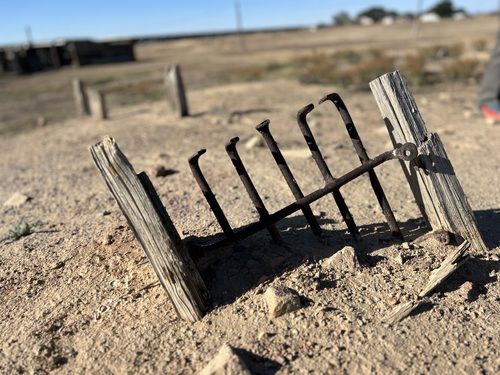
Czech experts have just launched the first-ever research project—including an archaeological excavation—at a former Gulag cam...
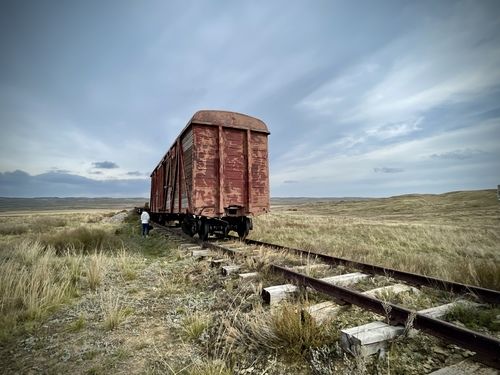
At the end of August 2026, we set out on the trail of the Gulag together with experienced archaeologists from the Department ...
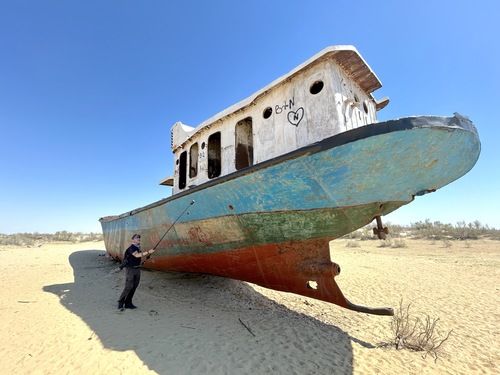
This April, the Gulag.cz expedition brought a unique discovery of the remains of a labor camp in the Uzbek desert. We will be...
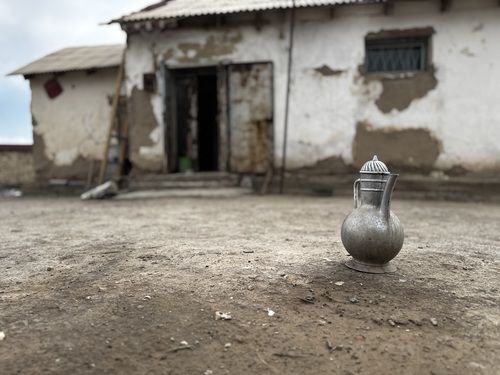
As part of our April expedition to Uzbekistan, we set out on the trail of a megalomaniac Soviet government project from the 1...
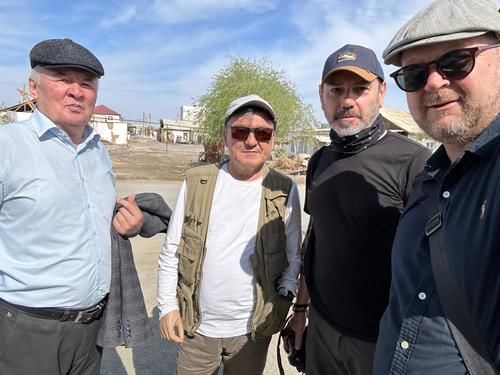
This time, the Gulag.cz research team has set out for Uzbekistan, specifically for its autonomous republic of Karakalpakstan,...
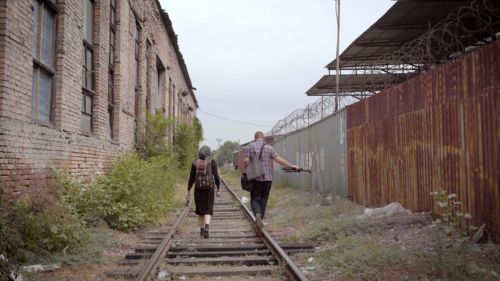
Christmas is approaching, and we have a small gift for you ahead of time! Our film from the expedition to Kyrgyzstan can now ...
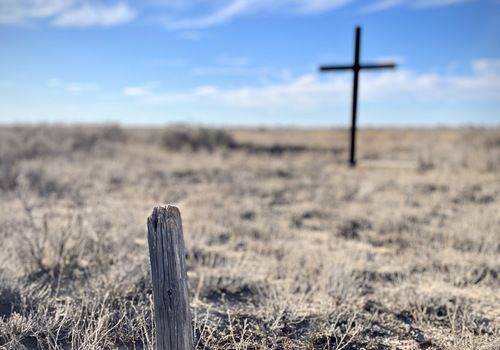
At the turn of September and October 2025, after four years, we returned to Kazakhstan to document the local remains of Gulag...

Our new film from the expedition to discover the fate of Czechoslovaks in Soviet Kyrgyzstan will premiere in April.
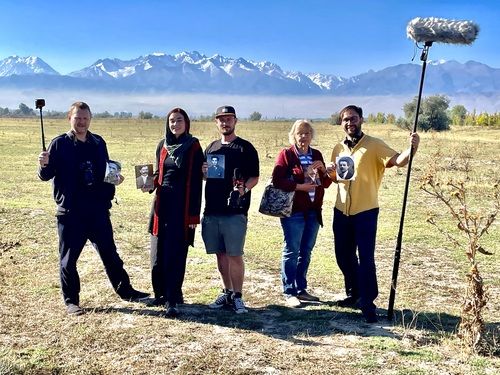
At the end of August 2024, we set out in search of Czech traces and evidence of Soviet state terror in Kyrgyzstan. The result...
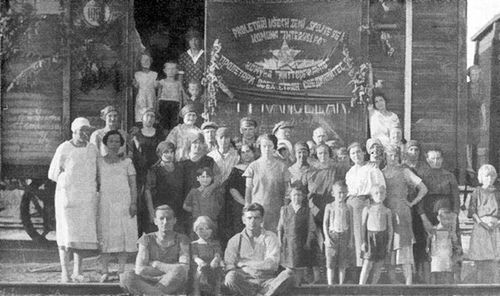
We are going on an expedition to Kyrgyzstan following the footsteps of Soviet repression and the Czechoslovak commune Interhe...
The Soviet terror left an indelible mark in today’s Kazakhstan. More than one million Kazakhs died of famine and millions of ...
One newly localized camp for Soviet POWs and a thorough mapping of the remains of other WWII Nazi camps – that’s the result o...

On Wednesday, October 2, 2019 was the premiere of the documentary film "A Journey to the Gulag" about our ...