The first archaeological investigation of the Gulag in the former USSR: Our expedition in Kazakhstan yielded a number of unique discoveries
September 03, 2026 | Expeditions
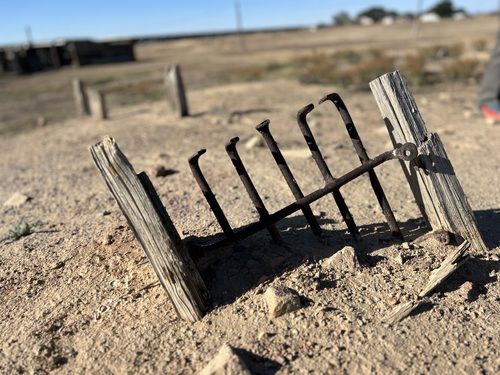
Czech experts have just launched the first-ever research project—including an archaeological excavation—at a former Gulag camp in Kazakhstan. It is a joint initiative involving the organization Gulag.cz and archaeologists from the University of West Bohemia in Pilsen. Until now, such research had not been possible in any post-Soviet country. The initial days of fieldwork have led to the identification of a women's camp section, the discovery of well-preserved barracks in the men's area, the finding of a cartridge case, and evidence indicating that prisoners suffered there for a longer period than previously recorded.


A country where a repressive Soviet regime operated for decades is opening up to comprehensive archaeological research on the Gulag for the first time. A research team is currently at work in Kazakhstan, documenting the remains of one of the Steplag camps; between 1948 and 1956, this camp held over 20,000 prisoners—predominantly political detainees from Ukraine, the Baltic states, and other countries, including around twenty Czechoslovaks. The expedition, located in the village of Terekty near the city of Zhezkazgan, builds upon the work of the organization Gulag.cz, which has been documenting Soviet labor camps for 15 years. This first-ever archaeological study of the Gulag—conducted in collaboration with archaeologists from the Faculty of Arts at the University of West Bohemia—follows up on the organization's 2021 expedition tracing the camps in Kazakhstan.
According to experts, the camp near the village of Terekty is exceptional and well-suited for research because traces of the entire prison complex have been preserved. "We found the remains of a women's camp, a men's camp featuring both archaeological relics and standing structures, an entire settlement for guards, and the headquarters—which were later occupied by people from a nearby, now-vanished village. Also preserved are the remnants of the industrial zone where imprisoned men and women performed slave labor, as well as a forgotten cemetery for the victims," described lead archaeologist Pavel Vařeka from the Faculty of Arts at the University of West Bohemia.
New findings also suggest that the camp likely operated for much longer than previously recorded for the Steplag camps. "All scholarly historical publications state that Steplag closed in 1956. Yet, at the site, we found glass bottles dating from between 1959 and 1961," said Štěpán Černoušek, chairman of the organization Gulag.cz.
In addition to the archaeological work itself, researchers can verify their findings with local historians and eyewitnesses. They managed to interview the village’s oldest resident, 78-year-old Mizambaj Bralin, who moved to Terekty in 1959. “According to him, a women’s camp filled with female prisoners from the Baltic states was still standing there at that time. This demonstrates that, although archival documents show Steplag was officially dissolved as an entity by a 1956 order from Moscow, not all prisoners were released; many camps likely continued to operate for several more years under different administrative control—details that never made it into history books relying solely on Moscow archives, which were often written by the perpetrators themselves,” added Štěpán Černoušek. According to experts, this highlights the importance of fieldwork at a site that had previously received no attention.


The uncompromising security measures at the camps are evidenced by spent shell casings found at the site. "They kept the women there like animals; I cannot imagine how any man could bring himself to fire at a woman," Mizambaj Bralin told the researchers. "Had we not found this last surviving witness, we would have been left to merely speculate about many things. Initial findings and the survey of the layout of the camp's surviving structures raised a number of questions that he helped us clarify, as well as providing insight into life within the camp," added Pavel Vařeka; according to him, the current research sheds new light on the nature of the very final phase of the Stalinist Gulag system.
The expedition has sparked great interest within Kazakh academic circles. It involves Kazakh historians from Zhezkazgan and Buketov University in Karaganda, as well as archaeologists from the Margulan Institute of Archaeology in Kazakhstan, which facilitates the necessary permits for archaeological research. "Such research would currently be impossible in Russia. Putin’s regime seeks to erase the history of the Gulag and Soviet repressions from public memory and space, while actually defending many Soviet crimes. Kazakhstan, however, is becoming increasingly open to this research, and we are encountering great support and understanding here," said Štěpán Černoušek.
"In the Czech Republic, we investigated the remains of communist penal labor camps and forced labor camps in the Jáchymov region. Now, we have ventured into the environment of the Soviet Gulag. It is a unique opportunity, as we can compare the original with the copy," concluded Pavel Vařeka. The expedition is part of the Zdivočelá země (Savage Land) project. While archaeologists from the University of West Bohemia focus on the technical research, Gulag.cz is documenting the expedition—partly for an upcoming documentary film and to make the findings accessible through the Gulag Online virtual museum.
Link to the complete photo gallery. Source: Gulag.cz
Czech experts have just launched the first-ever research project—including an archaeological excavation—at a former Gulag cam...
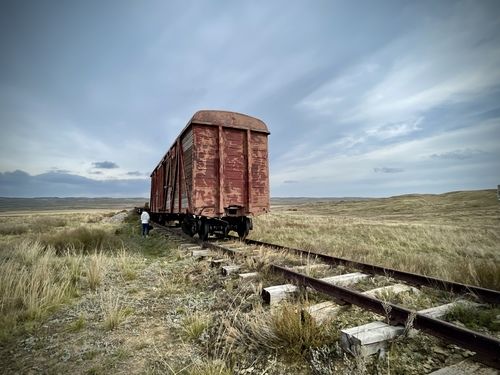
At the end of August 2026, we set out on the trail of the Gulag together with experienced archaeologists from the Department ...
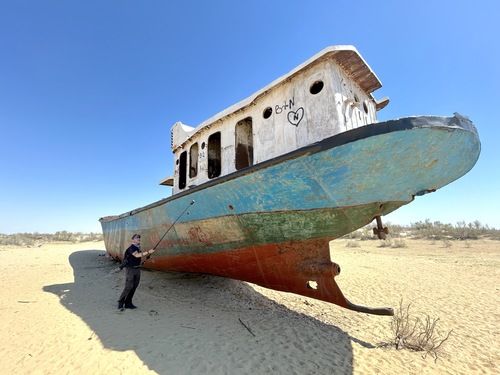
This April, the Gulag.cz expedition brought a unique discovery of the remains of a labor camp in the Uzbek desert. We will be...
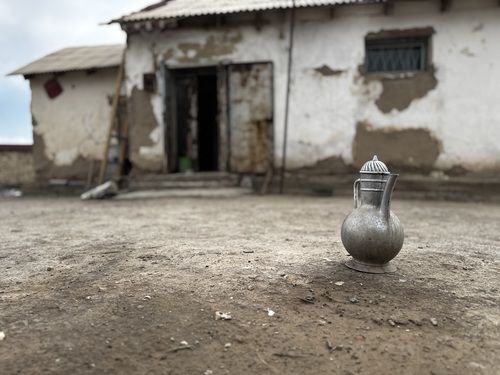
As part of our April expedition to Uzbekistan, we set out on the trail of a megalomaniac Soviet government project from the 1...
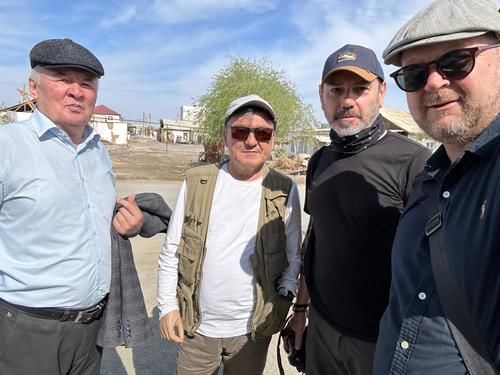
This time, the Gulag.cz research team has set out for Uzbekistan, specifically for its autonomous republic of Karakalpakstan,...
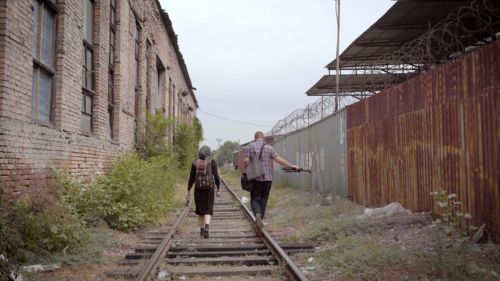
Christmas is approaching, and we have a small gift for you ahead of time! Our film from the expedition to Kyrgyzstan can now ...
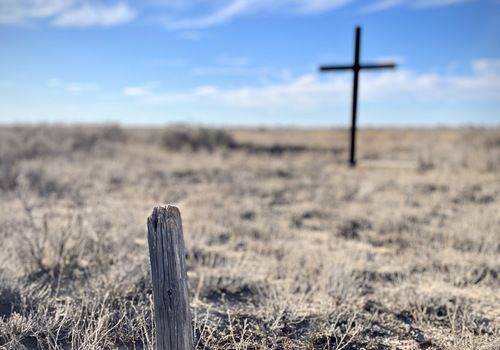
At the turn of September and October 2025, after four years, we returned to Kazakhstan to document the local remains of Gulag...
Our new film from the expedition to discover the fate of Czechoslovaks in Soviet Kyrgyzstan will premiere in April.
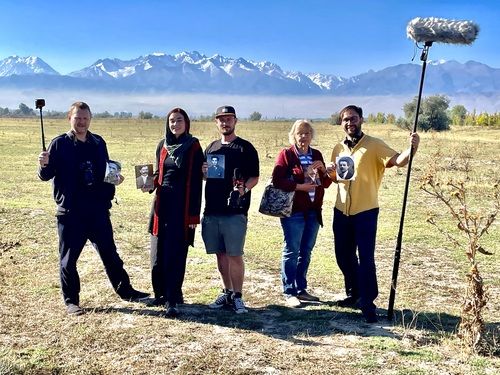
At the end of August 2024, we set out in search of Czech traces and evidence of Soviet state terror in Kyrgyzstan. The result...
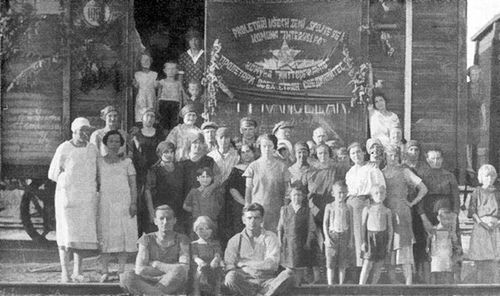
We are going on an expedition to Kyrgyzstan following the footsteps of Soviet repression and the Czechoslovak commune Interhe...
The Soviet terror left an indelible mark in today’s Kazakhstan. More than one million Kazakhs died of famine and millions of ...
One newly localized camp for Soviet POWs and a thorough mapping of the remains of other WWII Nazi camps – that’s the result o...
On Wednesday, October 2, 2019 was the premiere of the documentary film "A Journey to the Gulag" about our ...