Archaeology of the Gulag in Kazakhstan: new discoveries and new plans
November 05, 2025 | Expeditions | Expeditions, Expedition Kazakhstan, Expedition ‘Dead Canal’, Uzbekistan
At the turn of September and October 2025, after four years, we returned to Kazakhstan to document the local remains of Gulag camps. This time we set out for the towns of Zhezkazgan and Karaganda together with archaeologists from the Faculty of Arts at the University of West Bohemia in Pilsen, with whom we are planning a joint archaeological research project on site next year. We newly managed to discover the uniquely preserved and almost untouched remains of one camp, as well as two further, so far unmapped ones, including a forgotten prisoners' cemetery. And it is precisely on a detailed investigation of this site that we want to focus in the future.
We already knew about three points on the map where, in the last century, near the town of Zhezkazgan in Kazakhstan, the labour camps of the Steplag complex for political prisoners once stood — thanks to the previous Gulag.cz expedition from 2021. During that expedition, we documented these sites using non-invasive methods, including, among other things, drone imaging and comparison with American spy satellite images from the 1960s. The results are available on the website www.expedicekazachstan.cz, and the expedition also resulted in the documentary film Step a mráz (Steppe and Frost). We are very pleased that we are now following up on this pioneering expedition of ours with more thorough research in cooperation with experienced archaeologists.
A unique discovery
The current discovery of three further camps during the first surveys on the ground and using drones came as a surprise both to the expedition's participants and to local experts. The survey was carried out by Gulag.cz director Štěpán Černoušek, Pavel Vařeka, head of the Department of Archaeology at the Faculty of Arts of the University of West Bohemia, and Akzhol Dosnazarov, a PhD student at the same department. The researchers were assisted with locating the camps and with further information by Turganbek Alanijazov, a historian from the university in Zhezkazgan.
Two of the newly discovered camps are located on the outskirts of existing settlements. We also found another camp, together with traces of an economic zone, out in the steppe, several dozen kilometres from the town of Zhezkazgan. Owing to the remoteness of the site, the camp's remains have survived almost untouched. „On site there are ruins of prisoner barracks and other buildings, barbed-wire fencing, and a large number of discarded or lost objects documenting everyday life in a special camp for political prisoners," describes lead archaeologist Pavel Vařeka.


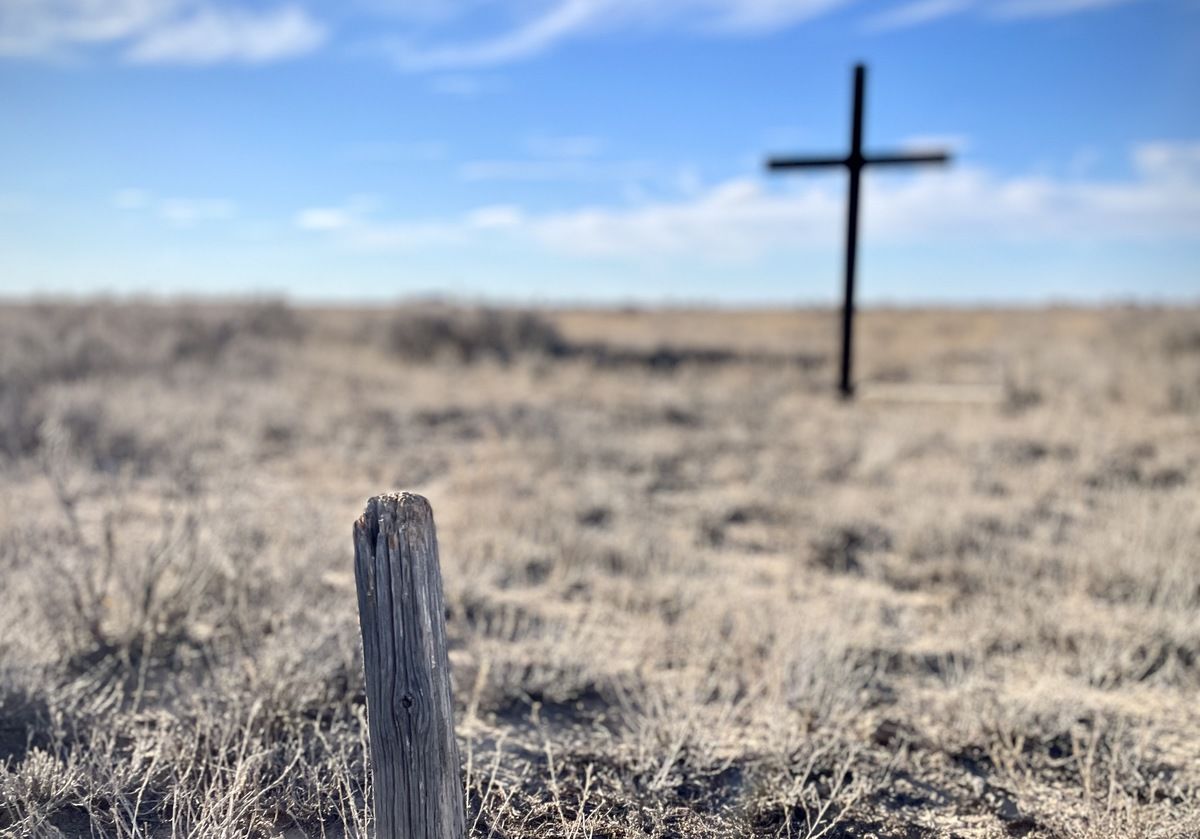
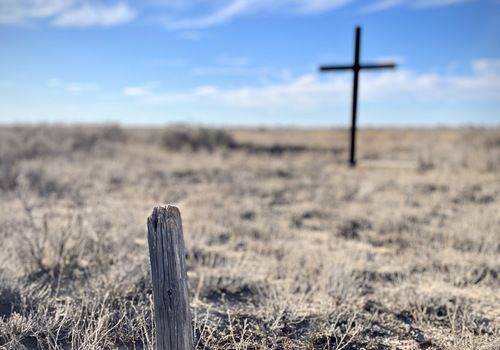
Nearby the camp, out in the steppe, we managed to locate a forgotten cemetery of victims, where individual graves are marked by wooden posts and broken crosses. „This is a unique and very striking find, which shows us what a tragic chapter of history this is, and how much remains unknown and unresolved. We don't know who is buried in these graves, nor what nationality they were, but given the diverse composition of Steplag's prisoners, we cannot rule out a Czech connection either," explains Štěpán Černoušek, according to whom the planned research, thanks to the gradually opening Kazakh archives, could shed more light not only through archaeological documentation but also on the fates of individual prisoners. „According to our estimates, hundreds of Czechs and Czechoslovak citizens stayed in the camps in Soviet Kazakhstan, but we currently know the specific fates of only a handful of individual cases," he adds. In Steplag alone, according to our previous findings, there were two dozen Czechoslovak citizens.
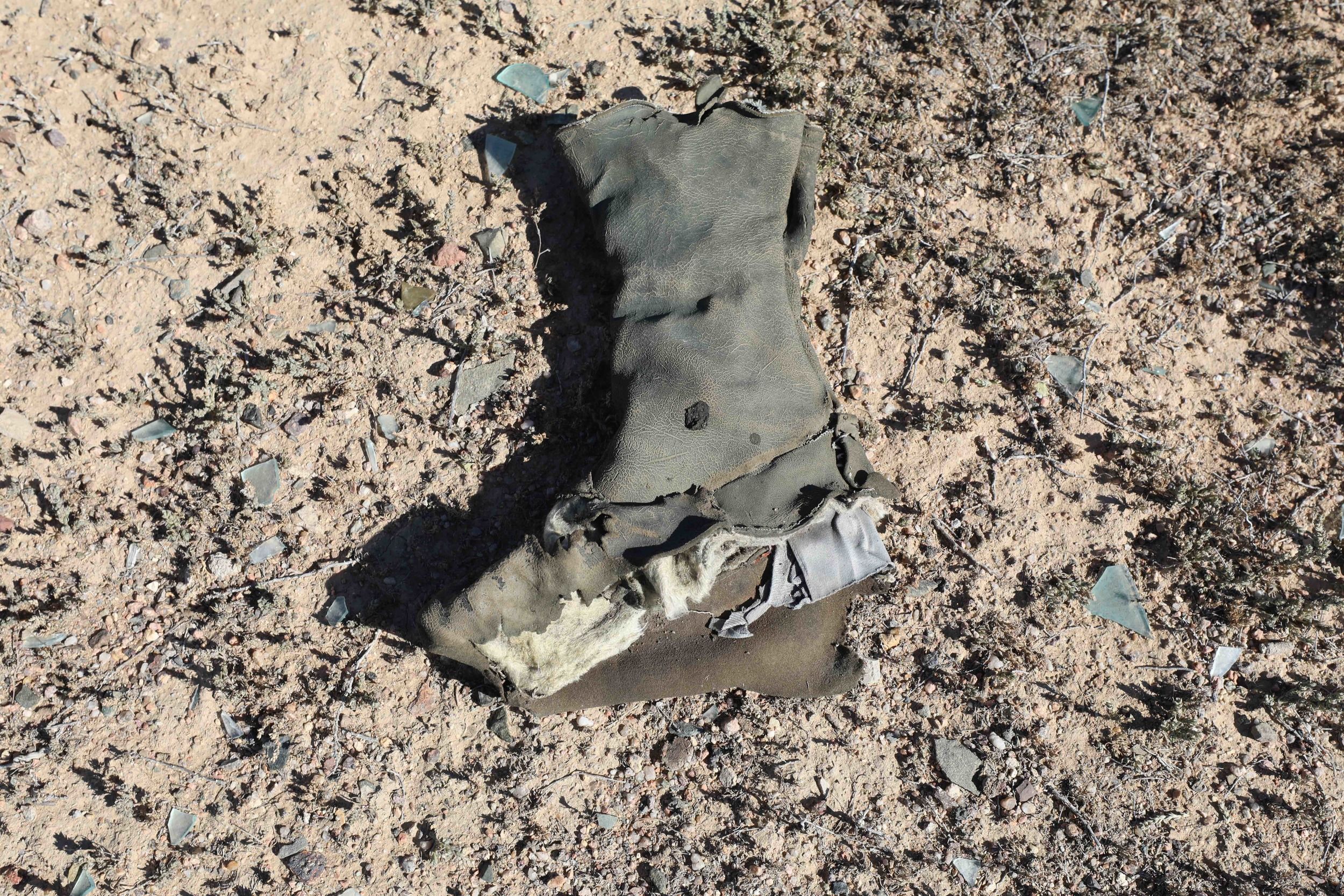
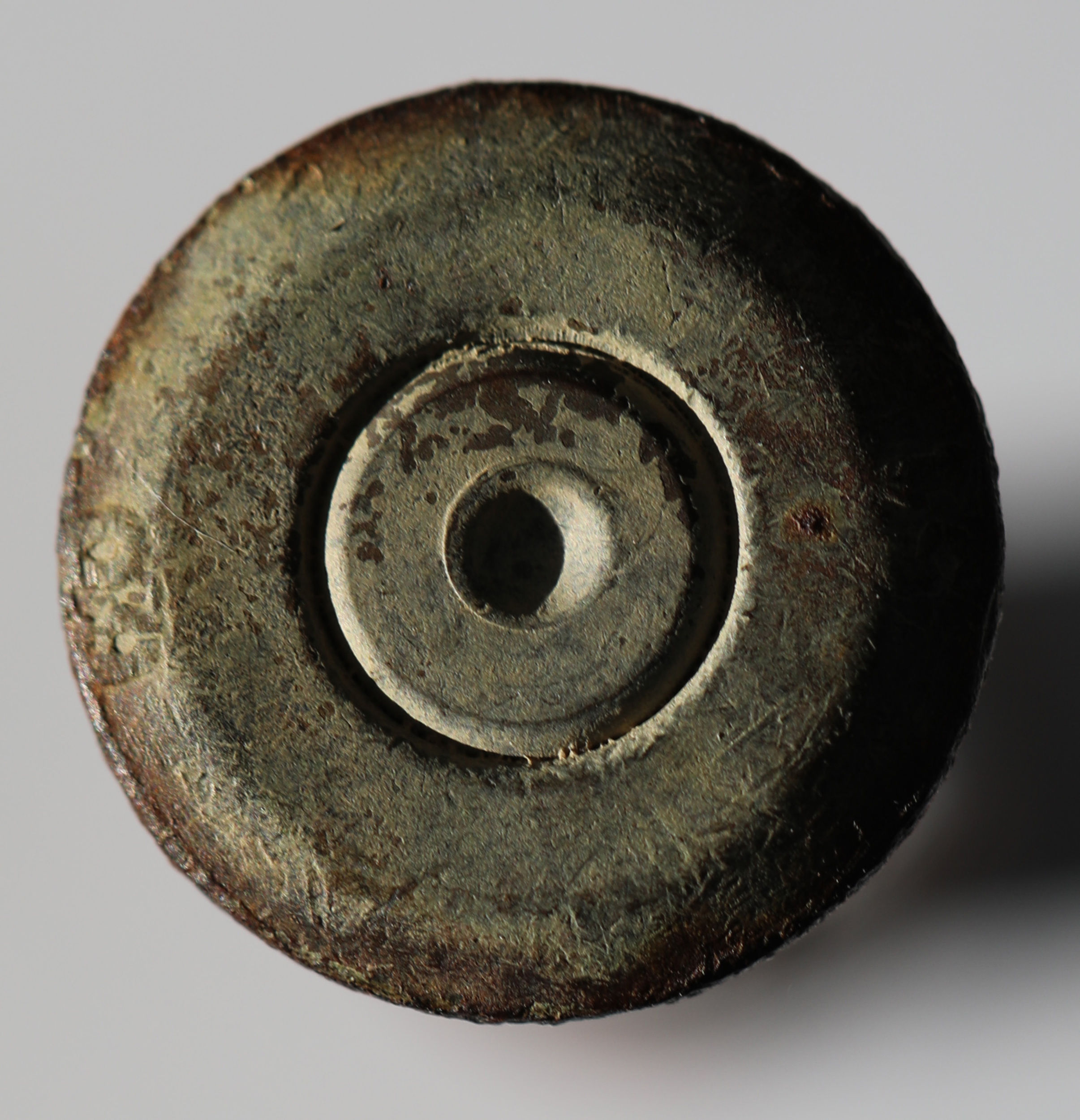
We found the first historical artefacts on the surface while surveying the discovered camp, among them fragments of vessels and bottles, an aluminium mug, and parts of prisoners' clothing and footwear. At the site of a former guard tower, we even discovered a spent cartridge case. „This shows that guards really did open fire from the towers, whether as a warning or at prisoners attempting to escape. We documented an identical situation at the remains of a guard tower in the Nikolaj camp in the Jáchymov region, from the same period," explains Pavel Vařeka.




Researching Steplag
The Steppe Camp, or Steplag for short, was a post-war complex of special camps for political prisoners under an intensified regime. Members of more than 40 nations were held there, among them primarily Lithuanians, Latvians, Ukrainians, but also Czechoslovaks, who mined copper, manganese and coal in the area around Zhezkazgan. It was there, in 1954, that the Kengir uprising broke out, which was bloodily suppressed by Soviet tanks. You can read more about Steplag on the website of our previous expedition, and about the Kengir uprising in our detailed article published for the 70th anniversary of this tragic event.
In addition to close cooperation with historian Turganbek Alanijazov, during the current expedition we also established cooperation with Buketov State University in Karaganda and with the Bolashak academic institution in the same city, which has published a number of works on Soviet repressions in Kazakhstan, on Karlag (the Karaganda camp), Steplag, and other camp complexes. We believe that the planned archaeological research will expand current knowledge of the topic as well as of the specific sites.
Archaeological research of Gulag camps combining both non-destructive methods and excavation has never before been carried out anywhere on the territory of the former Soviet Union. The joint team of archaeologists from Pilsen and Gulag.cz plans to launch it next year at the sites documented during this expedition. The research is part of the long-term project Zdivočelá země (Land Gone Wild): archaeological and transdisciplinary research of resilience strategies in the 20th century, which is primarily focused on research within the Czech Republic. „The differing conditions of preservation of the camps in the Kazakh steppes and in the Ore Mountains forests around Jáchymov offer exceptionally interesting possibilities for comparative research into the material traces of these facilities. The recovered remains of structures and objects make it possible to compare the architectural form of the camps and the living conditions within them," describes Pavel Vařeka.


Other discoveries from the expedition – new camps and a demolished barrack
In addition to the unique camp site out in the steppe, during our current several-day stay in Zhezkazgan and its surroundings we also carried out basic documentation of two further, previously undescribed sites of former camps. One of them is a smaller economic camp in the village of Kengir near Zhezkazgan. Several ruined barracks can be found there, though it is not entirely clear whether these are prisoner barracks or agricultural/economic buildings — further research will be needed here.
Another site we visited is the settlement of Baikonur, located 140 kilometres west of Zhezkazgan (this is not the site of the space cosmodrome of the same name — it is simply a coincidence of names; the cosmodrome itself lies a further 300 km away). One division of Steplag was also briefly located there, in which prisoners mined coal. However, coal had already been mined in Baikonur since the early 20th century (the mines were founded there by the British, still under tsarist rule) right up until the 1960s. There are simply too many overlapping layers and traces of mining, an abandoned little town, and industrial buildings on the site to be able to pinpoint the specific remains of the Gulag there.


We also visited sites that were thoroughly documented during our 2021 expedition. In the town of Zhezdy, where Steplag prisoners mined manganese and where, four years ago, we carefully mapped the well-preserved remains of a prisoner barrack for 250 people, we unfortunately discovered that this barrack has in the meantime been completely dismantled, most likely for building material. This confirmed the concerns we had after studying recent satellite images. It thus became clear just how important it is to document such sites — thanks to our previous expedition, we at least have a virtual reconstruction of this unique structure available.


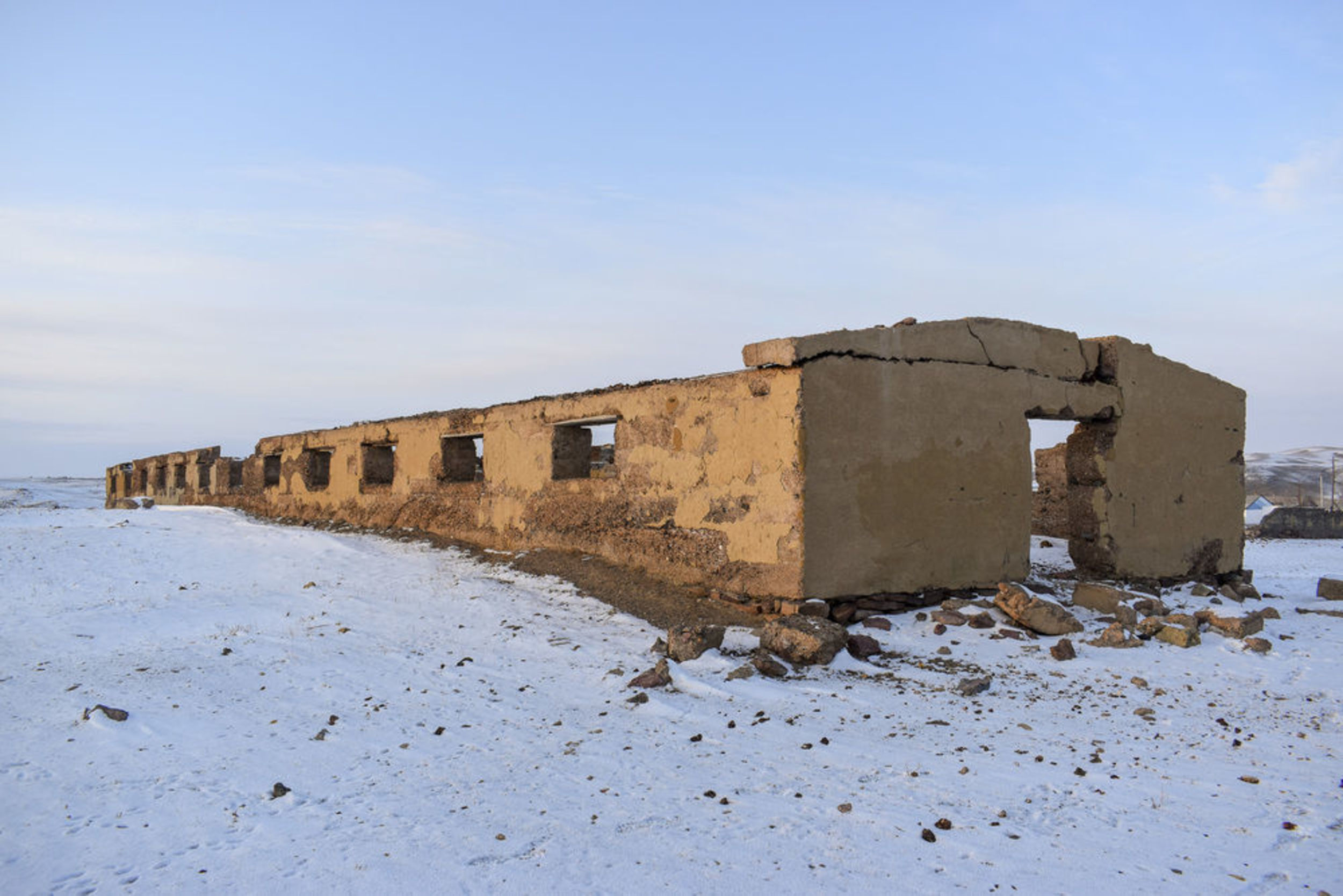
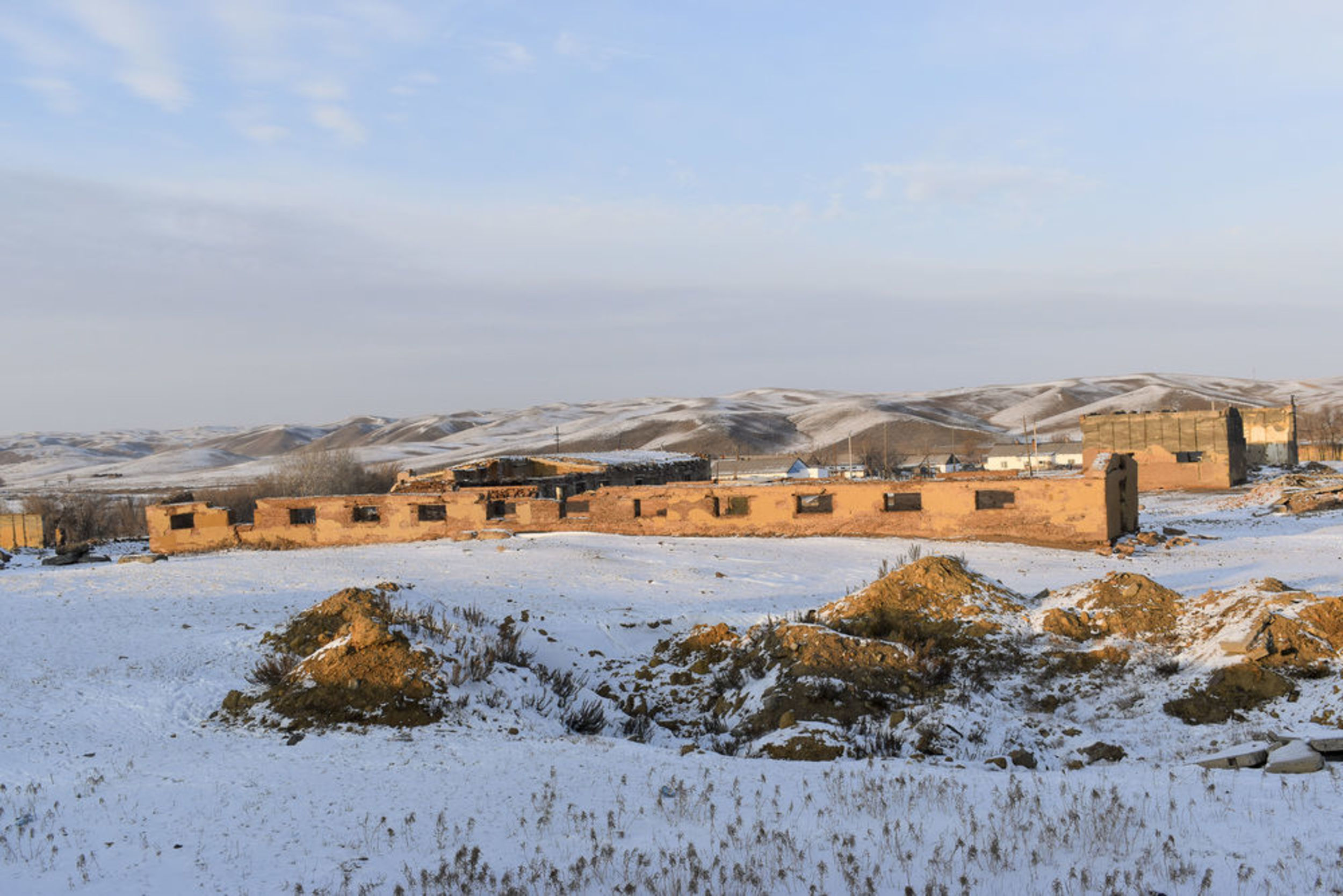
The remains of the camp and prisoner dugouts (zemlyanka) at the settlement of Rudnik remain in an almost unchanged state; we also found several fragments of barbed wire there. Unfortunately, this entire site is designated for open-pit copper mining, and it is only a matter of time before the traces of the Gulag here disappear irretrievably.

We also went to the remains of the 3rd division of Steplag, right on the edge of the town of Zhezkazgan, a site we had also documented in detail during our previous expedition and where the famous Kengir uprising took place. It must be noted that the unique remains of the walls separating the individual camp zones, as well as the surviving barracks and headquarters buildings, are gradually deteriorating more and more. One of the three headquarters buildings has half-collapsed over the past four years, the walls too are gradually crumbling and becoming covered by an ever-thicker layer of debris, and the former women's barrack is likewise in a wretched state — horses are kept in it, and the neglected area around the barrack is covered with horse carcasses.


On the other hand, part of the prisoner buildings has been turned into something of an open-air museum — four years ago, several ruined barracks were fenced off and cleared, and information panels were installed; we talk about this in more detail, for instance, at the end of our expedition film Step a mráz (Steppe and Frost). In 2023, some of the ruins were reinforced with new masonry (unfortunately rather insensitively), but nothing further has happened with the site as a whole. No real museum has been established here, local residents are often entirely unaware of the site, and no events are held there. Nevertheless, the current conservation work will undoubtedly help preserve part of the remains of Steplag's 3rd division better.

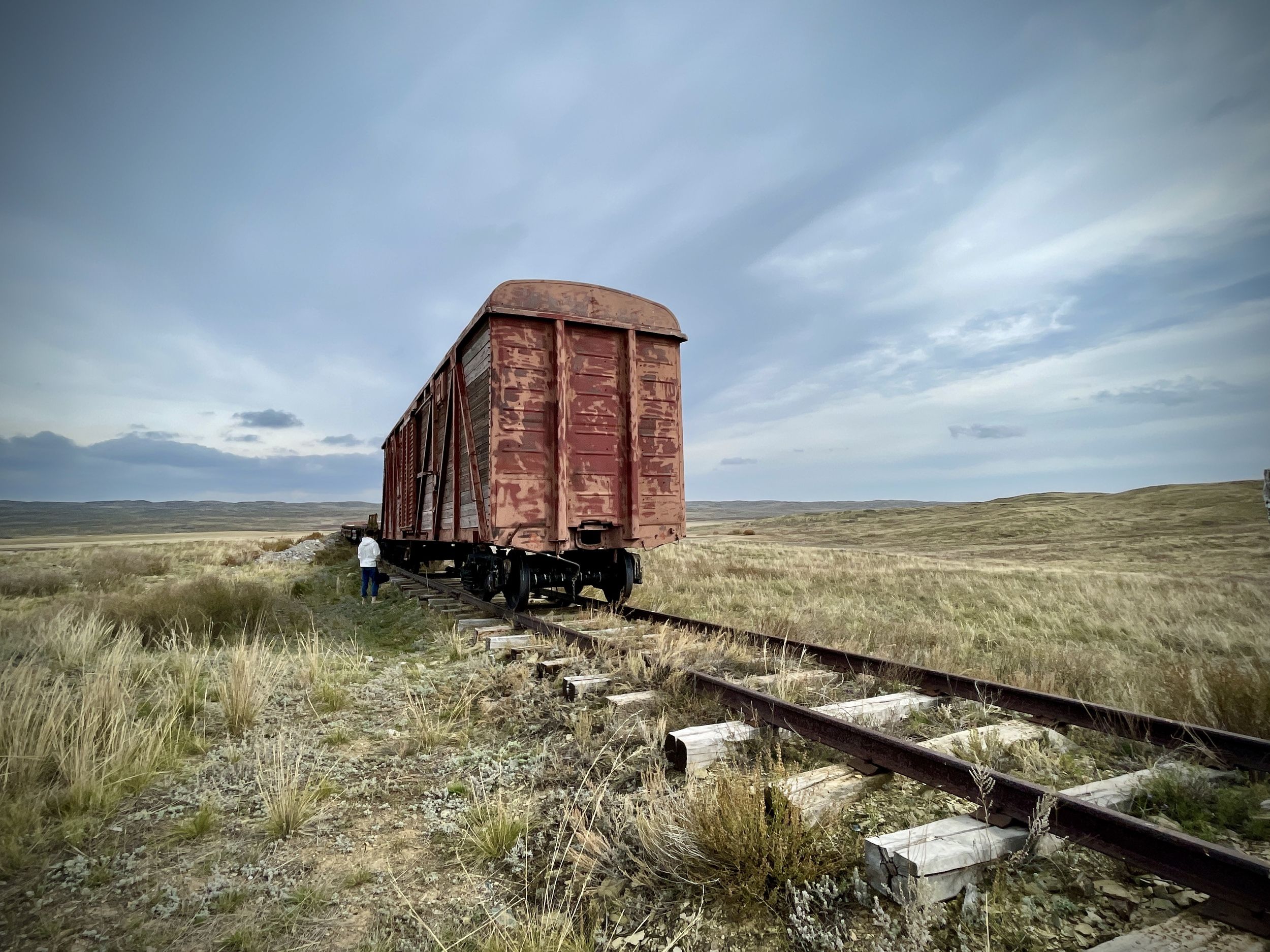
At the end of August 2026, we set out on the trail of the Gulag together with experienced archaeologists from the Department ...
At the turn of September and October 2025, after four years, we returned to Kazakhstan to document the local remains of Gulag...